Springtime in Hudson, OH is pleasant and gorgeous. However, for many people, it can also be quite hard to breathe. This is unfortunately when pollen season starts in our area. Itchy, watery eyes, sneezing, coughing, and other symptoms can result from allergies in the area. These allergies are almost entirely caused by pollen. This doesn’t only affect people when outside; it happens inside too. In fact, pollen can concentrate and become even worse inside the home. There are some ways that you can fight back, however. Modern filtration systems can help.
At Bernard Heating & Cooling, we want to help you experience true home comfort. This involves being able to breathe clean air in the home. Your HVAC unit can work with a filter to help clear the pollen out of your home. High-quality filtration ensures that these pollutants are removed from the air. Without filtration, they could potentially be recirculated throughout the living space. We want you to understand how quality HEPA filtration works with your HVAC to clear the pollen.
Standard Filters vs. High-Efficiency Options
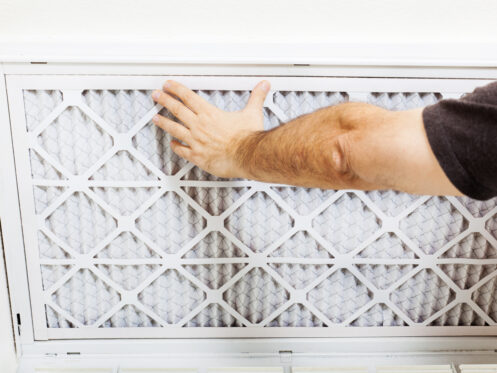
The odds are good that your modern HVAC unit has a standard pleated air filter that came with the device. These filters are decent at protecting your home and the machine itself from larger debris. This is because the filters were only designed to protect the unit’s internal components from getting too dirty. So, they catch large particles. Hair, carpet fibers, heavy dust, and actual visible debris are caught in the filters. When it comes to your indoor air quality (IAQ), however, they do not do the best job.
To be clear, pleated filters will keep larger dust and debris from accumulating. In no way are they worthless. They just have a lower Minimum Efficiency Reporting Value (MERV) rating. These standard filters fall between 1 and 8 on the MERV scale. To trap microscopic particles like certain types of pollen, a higher rating is often required. HEPA filters, with a MERV rating of 17-20, provide a solution for the smallest particles. For people in need of the highest level of residential air purity, this is a solid choice. These mats are much denser, and their randomly arranged fibers reduce gaps. The tight mesh handles various seasonal allergens with high efficiency.
Understanding the HEPA Standard
HEPA stands for High-Efficiency Particulate Air. It’s truly a class above the lower-rated MERV filters. In order to be rated as a true HEPA filter, the product must remove at least 99.97% of all particles down to a size of 0.3 microns. This is microscopic. A human hair is around 50 microns in diameter, which illustrates just how small the 0.3-micron benchmark truly is.
The reason 0.3 microns is the benchmark is that particles of this size are the most difficult to trap. By having this type of filtration installed, the system captures particulates as air circulates through the filtration unit. This ensures that the air being sent back through the vents has been thoroughly cleaned.
Integrating HEPA With Your HVAC System
One issue with HEPA filtration is that these filters are resistant to airflow because they are so incredibly dense. What this means for you is that a simple swap from a standard MERV-rated filter isn’t feasible. You cannot just place a HEPA filter into a standard HVAC filter slot and expect it to work. Your unit may not receive enough air, which can cause the system to “choke.” This leads to increased wear and tear, potentially resulting in equipment breakdowns and higher energy bills.
Utilizing HEPA filtration typically requires a bypass or a whole-house air purification system. These systems install into your HVAC configuration within the return air stream. This allows air to be pulled into the dedicated filtration system, providing hospital-grade air cleaning throughout your entire home.
Combating Pollen Infiltration
Pollen is an invasive guest in the Hudson area. It often enters the home on clothing, through open doors, or by drifting through microscopic gaps around windows. Once these particulates settle inside, they can become trapped in a continuous cycle. Without high-efficiency filtration, a standard HVAC system may simply recirculate these settled allergens throughout your living space, moving them from room to room every time the blower kicks on. This is why many families find that their allergy symptoms persist long after they’ve come inside and closed the windows.
A HEPA filtration system breaks this cycle by providing a superior barrier within the air stream. By integrating this level of purification into your home’s HVAC configuration, the system greatly improves. Your system now captures fine pollen spores before they can be redistributed through the supply vents. Instead of allowing allergens to travel through the home cycle after cycle, better filtration ensures they are trapped. The result is a controlled indoor environment where the air is consistently purified. This should provide the relief you need during the height of the area’s allergy season.
The Importance of Professional Installation
Adding a high-efficiency HEPA filtration system to the home is a technical task that requires professional oversight. This is because every HVAC system has a specific limit regarding how much resistance the blower motor can handle. As professionals, we calculate the precise airflow requirements of your home and measure the capabilities of your current equipment. We then use these measurements to fit you with the ideal filtration unit for your specific needs.
Beyond the technical side, a professional can identify the best location for the filtration unit to maximize air contact. Our technicians can also inspect your ductwork to ensure it’s airtight without gaps or loose seals. This requires specialized testing equipment to ensure your system runs efficiently and effectively.
Improving Your Home’s Health
Upgrading your filtration is one of the most effective ways to transform your house into a healthy environment. You do not have to opt for a whole-home purifier. You should, however, focus on proper filtration. Keep in mind that MERV-rated filters handle different things. Filters with lower ratings are considered by organizations like ASHRAE to be less efficient than higher-rated filters. Your tolerance to allergens should dictate the type of filtration you use.
There are many things beyond pollen a system like this can capture:
- Pet dander
- Dust mite waste
- Mold spores
- Smoke particles
- Atmospheric dust
- Bacteria
Work With Bernard Heating & Cooling
We understand how important home comfort is for our community. Our business has been around since 1991, offering HVAC services to residents in the area. The indoor air quality services we offer can help you remove pollen and other allergens. We can also improve your air with different humidification and dehumidification systems we can install to your HVAC. Our technicians offer maintenance, repair, and installation options for a range of HVAC equipment.
Any HVAC system in your home, from furnaces and ACs to air purifiers, requires routine maintenance to run effectively. We are proud to offer comprehensive maintenance services to our neighbors in Hudson. Our unique maintenance agreement helps you save time and money while ensuring you experience true home comfort and healthy air.
If you’re tired of dealing with allergies inside every spring, an air purification system might be right for you. Contact Bernard Heating & Cooling today to see how a HEPA system might be beneficial for your Hudson home.